
Wisdom Tooth Surgery in Ipoh: What Should You Expect?
If you have been experiencing pain, swelling or repeated infection at the back of your mouth, your wisdom tooth may be causing the problem.
Wisdom teeth are the last teeth to develop and usually appear during the late teenage years or early twenties. When there is not enough space for a wisdom tooth to erupt normally, it may become partially or completely trapped underneath the gum or jawbone. This is known as an impacted wisdom tooth.
Not every wisdom tooth needs to be removed. However, removal may be recommended when a wisdom tooth is causing problems such as repeated infection, decay, damage to the neighbouring tooth or other disease associated with the tooth.
If you are searching for wisdom tooth Ipoh, here is a step-by-step explanation of what normally happens during wisdom tooth surgery.
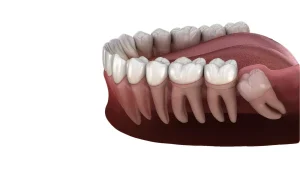
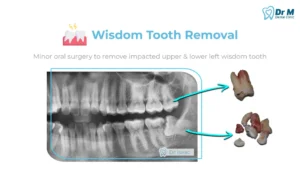
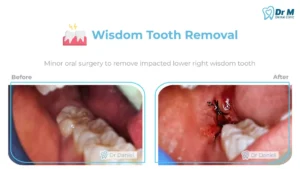
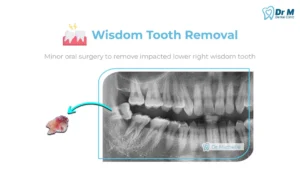
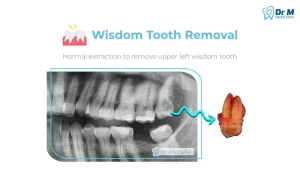
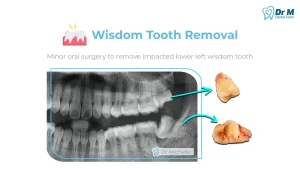
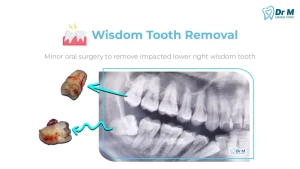
Step 1: Consultation and Dental Examination
The first step is a consultation with the dentist.
Your dentist will examine the wisdom tooth and the surrounding gum, looking for signs of:
- Infection or inflammation
- Tooth decay
- Gum problems
- Damage to the neighbouring molar
- Difficulty cleaning around the wisdom tooth
- Abnormal tooth position
- Swelling or tenderness
Your symptoms and medical history are also important. Tell your dentist about any medications you take, allergies, medical conditions and previous problems with dental anaesthesia.
A wisdom tooth that is completely healthy and not causing problems may not necessarily require removal. The decision should be based on the individual tooth and the patient’s circumstances.
Step 2: Dental X-Ray and Assessment
An X-ray is usually taken before surgical removal.
The X-ray allows the dentist to assess:
- The position and angle of the wisdom tooth
- Whether the tooth is impacted
- The shape and number of roots
- The amount of surrounding bone
- The relationship between the wisdom tooth and neighbouring teeth
- Important anatomical structures nearby
For some lower wisdom teeth, particularly when the roots appear close to an important nerve, additional three-dimensional imaging such as a CBCT scan may sometimes be considered.
The X-ray helps the dentist plan the procedure rather than simply attempting to remove the tooth without knowing its position.
Step 3: Discussing the Treatment Plan
After examination and imaging, your dentist will explain the proposed treatment.
Depending on the position of the tooth, removal may be relatively straightforward or may require a surgical approach.
Your dentist may discuss:
- Whether the wisdom tooth should be removed
- How difficult the extraction is expected to be
- The type of anaesthesia
- Whether the tooth needs to be sectioned
- Possible risks and complications
- Post-operative instructions
- Whether referral to an oral and maxillofacial surgeon is appropriate
The exact treatment varies from person to person because every wisdom tooth has a different position and root shape.
Step 4: Local Anaesthetic
Before the procedure begins, local anaesthetic is administered around the wisdom tooth.
The purpose is to completely numb the area so that you should not feel sharp pain during the procedure.
You may still feel:
- Pressure
- Pushing
- Vibration
- Movement of the tooth
These sensations are normal during extraction.
For more complex cases or certain patients, additional sedation or other forms of anaesthesia may be considered depending on the clinical situation.
Step 5: Preparing the Surgical Area
Once the area is numb, the dentist prepares the mouth for the procedure.
If the wisdom tooth is fully erupted and accessible, it may sometimes be removed similarly to a normal tooth.
However, an impacted wisdom tooth may be partially or completely covered by gum or bone. In these cases, a surgical approach may be necessary.
Step 6: Making a Small Incision in the Gum
For an impacted wisdom tooth, the dentist may make a small incision in the gum to gain access to the tooth.
The gum is carefully moved aside to expose the tooth and, if necessary, the surrounding bone.
This is one of the main differences between a simple extraction and a surgical wisdom tooth removal.
Step 7: Removing a Small Amount of Bone
If the wisdom tooth is trapped underneath the jawbone, a small amount of bone surrounding the tooth may need to be removed.
This allows the dentist to access the tooth and remove it in a controlled manner.
The amount of bone that needs to be removed depends on the position and depth of the impacted wisdom tooth.
Not every wisdom tooth requires bone removal.
Step 8: Sectioning the Wisdom Tooth
Some impacted wisdom teeth cannot be safely removed as one complete piece.
In these situations, the dentist may divide the tooth into smaller sections.
For example, the crown and roots may be separated, or the tooth may be divided into several pieces. The individual sections can then be removed more safely and with less unnecessary force.
Although the idea of cutting a tooth into pieces may sound frightening, it is a routine surgical technique for certain impacted teeth.
Step 9: Removing the Tooth
Once adequate access has been created, the wisdom tooth or its sections are carefully removed.
The dentist will work around the surrounding tissues and neighbouring teeth to minimise unnecessary trauma.
The duration of surgery varies considerably.
A straightforward wisdom tooth may take only a few minutes, while a more difficult impacted tooth can take significantly longer.
Step 10: Cleaning and Checking the Socket
After the tooth has been removed, the surgical area is inspected.
The socket may be cleaned to remove debris and tooth fragments.
The dentist will also check that the tooth has been removed as planned and that the surgical site is suitable for closure.
Step 11: Stitches
If an incision was made, the gum may be repositioned and closed using stitches.
Dissolvable stitches are commonly used for wisdom tooth surgery and may gradually disappear as the wound heals.
Not every extraction requires stitches. Whether stitches are necessary depends on how the tooth was removed and the type of surgical access required.
Step 12: Gauze and Bleeding Control
After surgery, gauze may be placed over the extraction area.
You will usually be asked to bite gently but firmly on the gauze for a period of time to help control bleeding and allow a blood clot to form.
A blood clot is an important part of normal healing.
For this reason, following your dentist’s instructions during the first 24 hours is particularly important.
What Happens After Wisdom Tooth Surgery?
It is normal to experience some discomfort and swelling after wisdom tooth removal.
Swelling and soreness are often more noticeable during the first few days and gradually improve as healing progresses. Jaw stiffness and mild bruising can also occur, particularly after a more difficult surgical extraction.
Your dentist will provide specific post-operative instructions according to your procedure.
These may include:
- Take prescribed or recommended medication as instructed
- Avoid smoking
- Avoid alcohol during the initial healing period
- Avoid strenuous physical activity immediately after surgery
- Follow instructions regarding mouth rinsing
- Keep the mouth clean without disturbing the surgical site
- Choose suitable foods while the area is healing
- Attend a follow-up appointment if required
How Long Does Wisdom Tooth Surgery Take to Heal?
Healing time varies depending on the difficulty of the extraction and the individual patient.
Pain, swelling and jaw stiffness may be most noticeable during the first few days. Some soreness can continue for a longer period while the tissues heal.
It is important to understand that the visible gum may appear to heal relatively quickly while deeper tissues continue healing underneath.
When Should You Contact Your Dentist?
Contact your dentist if you experience symptoms that concern you or are getting worse rather than gradually improving.
Examples include:
- Increasing rather than decreasing swelling
- Persistent or worsening pain
- Significant bleeding
- Fever or feeling unwell
- Difficulty swallowing or breathing
- Pus or persistent unpleasant discharge
- Other unexpected symptoms after surgery
Your dentist can assess whether the healing process is progressing normally and whether additional treatment is required.
Does Every Wisdom Tooth Need Surgery?
No.
Some wisdom teeth are fully erupted and can be removed using a relatively straightforward extraction technique. Other teeth may be impacted and require a surgical approach involving an incision, bone removal and/or sectioning of the tooth.
Some wisdom teeth that are healthy and not causing problems may not need to be removed at all.
The appropriate treatment depends on the individual tooth, its position, symptoms and clinical findings.
Looking for Wisdom Tooth Treatment in Ipoh?
If you have pain, swelling or recurring infection around your wisdom tooth, a dental examination can help determine what is happening.
At Dr M Dental Clinic Ipoh, we assess wisdom teeth individually and explain the findings and treatment options before proceeding.
If you are searching for wisdom tooth Ipoh, you can arrange a consultation to have your wisdom tooth examined and assessed.
Dr M Dental Clinic Ipoh
Opening Hours: Every day, 9 AM – 6 PM
Including Saturdays, Sundays & Public Holidays
This article is for general educational information and does not replace an individual dental examination. The appropriate treatment for a wisdom tooth depends on the patient’s clinical condition and the position of the tooth.