
Wisdom teeth are the last set of adult teeth to develop and usually appear during the late teenage years or early twenties. While some wisdom teeth grow normally without causing problems, others may become trapped under the gum or grow at an angle because there is not enough space in the jaw.
If you are experiencing pain at the back of your mouth, swollen gums, difficulty opening your mouth, or food frequently getting trapped around your wisdom tooth, it may be time to have your teeth checked by a dentist.
If you are searching online for the best dentist Ipoh for wisdom tooth removal, understanding the condition and treatment process can help you make a more informed decision.
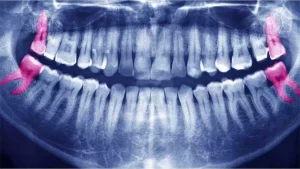
What Is a Wisdom Tooth?
Wisdom teeth, also known as third molars, are located at the very back of your mouth. Most people develop up to four wisdom teeth, although some people have fewer or none.
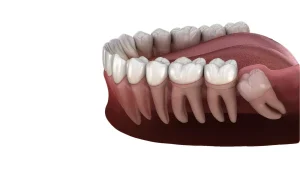
Because wisdom teeth are the last teeth to erupt, there may not be enough space for them to grow into a normal position. When a wisdom tooth cannot fully erupt, it is known as an impacted wisdom tooth.
An impacted wisdom tooth may be:
- Partially covered by gum
- Completely trapped underneath the gum or bone
- Tilted towards the tooth in front
- Growing at an unusual angle
- Difficult to clean because of its position
The Malaysian Ministry of Health’s clinical practice guideline notes that lack of space, obstruction from adjacent structures or teeth, and abnormal tooth positioning can contribute to wisdom tooth impaction.
Why Do Wisdom Teeth Sometimes Need to Be Removed?
Not every wisdom tooth needs to be removed. If a wisdom tooth is healthy, functional and not causing problems, your dentist may recommend monitoring it instead.
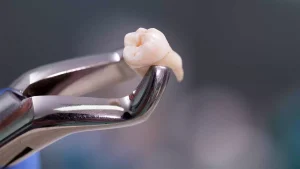
However, removal may be considered when a wisdom tooth is causing or contributing to dental problems.
Common problems include:
1. Repeated Gum Infection
Partially erupted wisdom teeth can trap food and bacteria underneath the gum. This may lead to pericoronitis, an infection and inflammation around the wisdom tooth.
Symptoms can include pain, swelling, bad taste, difficulty opening the mouth and discomfort when chewing.
2. Tooth Decay
Because wisdom teeth are located at the back of the mouth, they can be difficult to brush and floss properly. Food and plaque may accumulate around the tooth, increasing the risk of decay.
An impacted wisdom tooth can also make it difficult to clean the neighbouring second molar, potentially affecting the tooth in front of it.
3. Gum Disease
Difficulty cleaning around an impacted or partially erupted wisdom tooth may contribute to inflammation and gum disease around the wisdom tooth and adjacent teeth.
4. Damage to the Adjacent Tooth
A wisdom tooth growing at an angle may press against the tooth in front of it. Food can also become trapped between the two teeth, increasing the risk of decay and gum problems.
5. Cysts and Other Problems
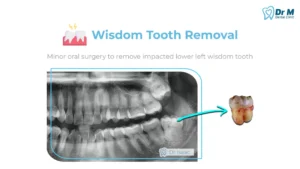
In some cases, a cyst can develop around an impacted wisdom tooth. This is less common, but it is one of the conditions your dentist may look for during an examination and X-ray.
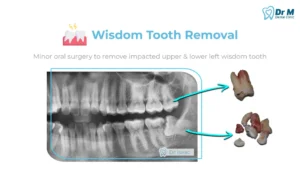
Does Every Impacted Wisdom Tooth Need to Be Removed?
No.
An impacted wisdom tooth does not automatically mean that extraction is necessary. If it is not causing disease or other dental problems, your dentist may recommend monitoring it rather than removing it.
The decision depends on factors such as the position of the tooth, symptoms, condition of the surrounding gum and teeth, and findings from your dental examination and X-ray.
This is why an examination is important before deciding whether wisdom tooth removal is appropriate.


What Happens Before Wisdom Tooth Removal?
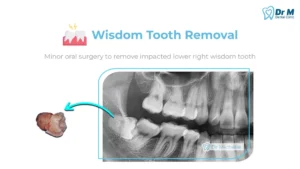
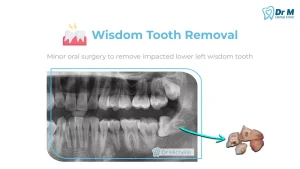
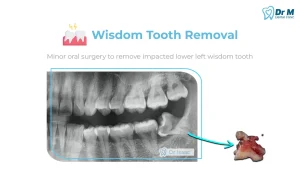
Before extraction, your dentist will examine the wisdom tooth and may take an X-ray to assess its position.
An X-ray can help your dentist determine:
- The direction in which the tooth is growing
- Whether the tooth is impacted
- The relationship between the wisdom tooth and neighbouring teeth
- The position and shape of the roots
- Whether there are other concerns around the tooth
For lower wisdom teeth, the dentist will also consider the relationship between the roots and nearby nerves when planning treatment.
Is Wisdom Tooth Removal Painful?
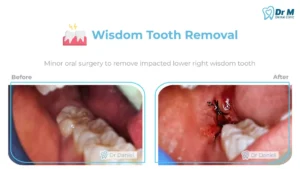
Wisdom tooth removal is normally performed under local anaesthetic, which numbs the treatment area.
You should not feel sharp pain during the procedure, although you may feel pressure or movement. If you experience pain during treatment, tell your dentist so additional anaesthetic can be considered.
Some wisdom teeth are relatively straightforward to remove, while others may require a minor surgical procedure if the tooth is impacted or partially covered by gum or bone.


What Can I Expect After Wisdom Tooth Removal?
Some discomfort, swelling and jaw stiffness can occur after wisdom tooth removal. These symptoms are generally more noticeable during the first few days and gradually improve during recovery.
Depending on the difficulty of the extraction, recovery can vary from person to person.
Your dentist may advise you to:
- Follow the prescribed medication instructions
- Eat softer foods initially
- Avoid smoking
- Avoid alcohol and very hot drinks during the early healing period
- Keep the extraction area clean according to your dentist’s instructions
- Avoid disturbing the blood clot that forms in the socket
A blood clot is an important part of normal healing. If the clot becomes dislodged, a painful condition known as dry socket can develop.

Are There Risks With Wisdom Tooth Removal?
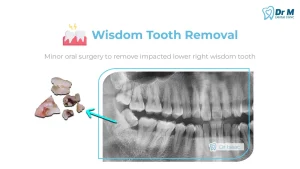
Like any dental procedure, wisdom tooth removal has potential risks. These depend on the position and difficulty of the tooth.
Possible complications include:
- Pain and swelling
- Bleeding
- Infection
- Dry socket
- Temporary difficulty opening the mouth
- Temporary numbness or tingling
For lower wisdom teeth that are close to important nerves, there is also a risk of altered sensation involving the lip, chin or tongue. Your dentist should assess the individual risk based on your X-ray and explain the treatment options before proceeding.

When Should You See a Dentist About Your Wisdom Tooth?
Consider arranging a dental examination if you experience:
- Pain at the back of your mouth
- Swollen or bleeding gums around a wisdom tooth
- Repeated gum infections
- Difficulty opening your mouth
- Food frequently getting trapped around the wisdom tooth
- Bad taste or unpleasant smell from the area
- Swelling around the jaw or face
- Pain affecting the tooth next to the wisdom tooth
If you have severe or worsening pain, significant swelling, persistent bleeding, fever or other unusual symptoms, seek dental attention promptly.

Wisdom Tooth Removal in Ipoh
At Dr M Dental Clinic Ipoh, wisdom tooth problems can be assessed through a dental examination and appropriate X-rays. The treatment recommendation depends on the condition and position of your wisdom tooth rather than simply removing every impacted wisdom tooth.
If you are looking for a best dentist Ipoh for wisdom tooth assessment or are experiencing pain from an impacted wisdom tooth, an examination can help determine whether monitoring, treatment or extraction is appropriate.
Don’t wait until recurring wisdom tooth pain becomes a bigger problem. Book a dental consultation to have your wisdom teeth assessed and understand the treatment options available for your individual situation.
Dr M Dental Clinic Ipoh
Opening Hours: Every day, 9 AM – 6 PM
Including Saturdays, Sundays & Public Holidays