
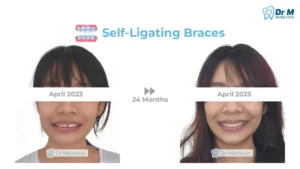
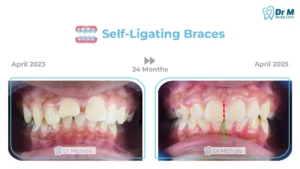
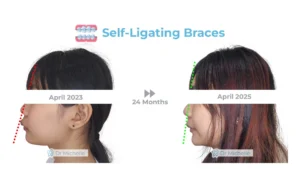
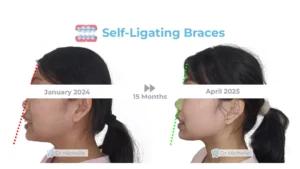
If you are considering braces in Ipoh, you may have come across the term self-ligating braces. Unlike traditional braces, self-ligating braces use brackets with a built-in locking mechanism to hold the orthodontic wire in place.
At Dr M Dental Clinic Ipoh, we offer different orthodontic treatment options depending on your teeth, bite and treatment goals. Here is what you should know about self-ligating braces before deciding whether they may be suitable for you.
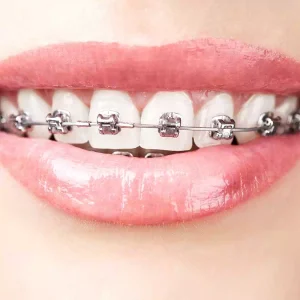
What Are Self-Ligating Braces?
Self-ligating braces are a type of fixed orthodontic appliance that uses special brackets with a built-in clip or sliding mechanism.
Traditional braces generally use small elastic ligatures, sometimes called “rubber bands,” to secure the stainless steel archwire to each bracket. Self-ligating brackets, on the other hand, have their own locking mechanism.
This allows the orthodontic wire to be held directly within the bracket without requiring an elastic ligature on every tooth.
Despite the difference in bracket design, both systems work on the same basic principle: controlled orthodontic forces are used to gradually move teeth into a better position.
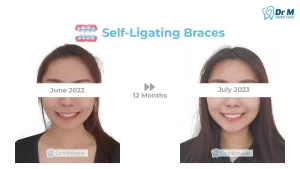
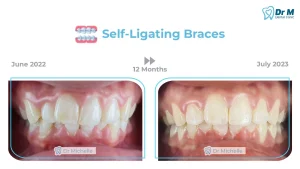
How Do Self-Ligating Braces Work?
After the brackets are attached to your teeth, a stainless steel archwire is placed into the brackets.
The self-locking mechanism keeps the wire in position. As treatment progresses, the orthodontic wire and brackets work together to apply controlled forces to the teeth.
As the teeth move, the surrounding periodontal tissues also adapt to the new tooth positions.
Orthodontic treatment is therefore not simply about “pushing teeth.” The bone and surrounding tissues must remodel as the teeth gradually move.
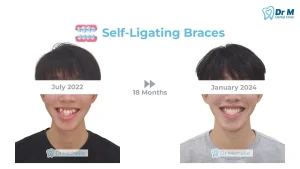
Are Self-Ligating Braces Faster?
Treatment time varies from person to person.
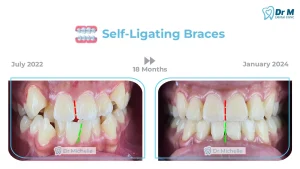
Self-ligating braces use a more advanced bracket design and may allow efficient tooth movement in suitable cases. Depending on the complexity of the malocclusion and the patient’s response to treatment, treatment may sometimes be shorter than conventional braces.
In many suitable cases, treatment can potentially be around six months shorter than traditional braces, but this is not a guarantee.
The total treatment time depends on factors such as:
- The amount of crowding
- Tooth position
- Bite problems
- Whether extractions are required
- The amount of tooth movement needed
- Patient compliance
- Oral hygiene
- Individual biological response to orthodontic treatment
Your dentist or orthodontist will be able to give you a more meaningful estimated treatment duration after examining your teeth.
Do Self-Ligating Braces Still Require Monthly Visits?
Yes.
One common misconception is that self-ligating braces eliminate the need for regular orthodontic appointments. They do not.
Patients still need regular appointments, usually around once a month, so that the dentist can:
- Monitor tooth movement
- Change or adjust the orthodontic wire
- Check the bite
- Assess treatment progress
- Make necessary adjustments
- Monitor the health of the teeth and gums
Regular appointments are an important part of successful orthodontic treatment regardless of the type of braces used.
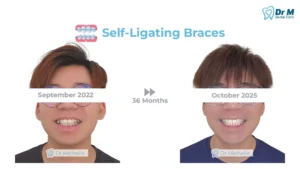
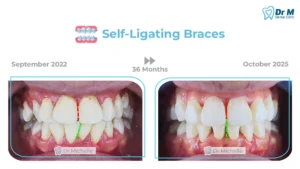
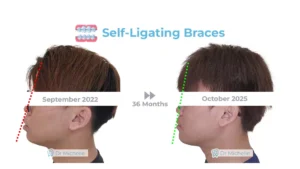
Self-Ligating Braces vs Traditional Braces
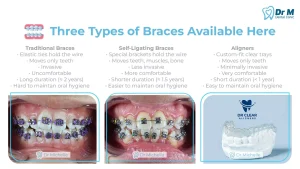
The main difference is the way the orthodontic wire is secured.
| Feature | Self-Ligating Braces | Traditional Braces |
|---|---|---|
| Bracket mechanism | Built-in locking mechanism | Usually uses elastic ligatures |
| Stainless steel wire | Held by bracket clip | Held by elastic ligature |
| Fixed appliance | Yes | Yes |
| Regular appointments | Required | Required |
| Tooth movement | Gradual and controlled | Gradual and controlled |
| Treatment duration | Depends on individual case | Depends on individual case |
It is important to remember that the bracket system alone does not determine the final treatment result. Diagnosis, treatment planning, the complexity of the case and patient cooperation all play important roles.
Are Self-Ligating Braces Suitable for Everyone?
Not necessarily.
Orthodontic treatment should be planned according to your individual dental condition rather than choosing a particular type of braces simply because it sounds more advanced.
During your consultation, your dentist may assess:
- Tooth alignment
- Crowding and spacing
- Overbite and overjet
- Jaw relationship
- Tooth and gum health
- Previous dental treatment
- Whether tooth extraction may be required
In some cases, other orthodontic options may be more appropriate.
How Much Do Self-Ligating Braces Cost in Ipoh?
The cost of braces in Ipoh varies depending on the clinic, treatment complexity and the type of orthodontic system used.
Other factors may include:
- Initial consultation and records
- X-rays or dental scans
- Whether extractions are required
- Duration of treatment
- Retainers after treatment
Rather than comparing the price of brackets alone, it is worth considering what is included in the complete treatment plan.
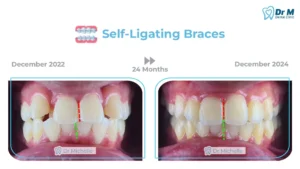
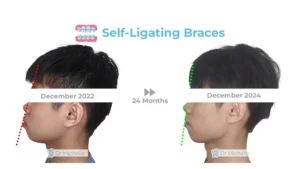
Looking for Braces in Ipoh?
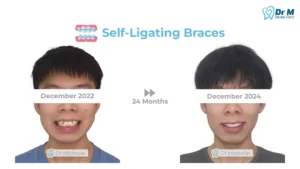
If you are considering braces in Ipoh, self-ligating braces may be one of the options worth discussing with your dentist.
At Dr M Dental Clinic Ipoh, we believe orthodontic treatment should begin with understanding your teeth, bite and treatment goals. A consultation allows the dentist to assess your case and explain the available options, expected treatment duration and estimated cost.
Self-ligating braces offer a different bracket design compared with traditional braces, but regular monitoring and good patient cooperation are still essential throughout treatment.
Want to know whether self-ligating braces are suitable for you? Book a braces consultation with Dr M Dental Clinic Ipoh to discuss your orthodontic options.
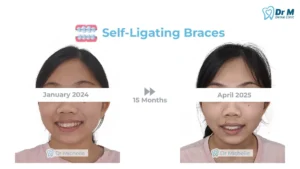
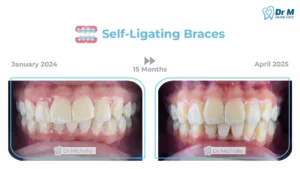
Dr M Dental Clinic Ipoh
Opening Hours: Every day, 9 AM – 6 PM
Including Saturdays, Sundays & Public Holidays