
What Is Root Canal Treatment?
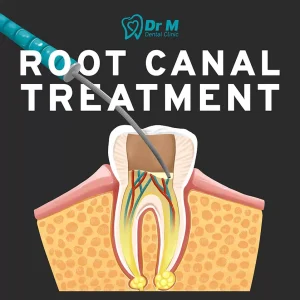
Root canal treatment, also known as endodontic treatment, is a dental procedure used to treat a tooth when the pulp inside the tooth becomes inflamed or infected.
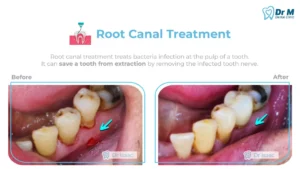
The pulp is the soft tissue inside a tooth that contains nerves, blood vessels and connective tissue. Deep tooth decay, cracks, trauma or repeated dental procedures can damage the pulp. When the pulp becomes severely inflamed or infected, root canal treatment may be recommended to remove the damaged tissue, clean and disinfect the root canals, and seal the tooth.
The main goal of root canal treatment is to save the natural tooth and allow it to continue functioning.
If you are searching for root canal Ipoh, understanding what happens during the procedure can help you feel more prepared and less anxious.
When Is a Root Canal Needed?
A dentist may recommend root canal treatment when the pulp of a tooth is inflamed, infected or no longer healthy.
Common causes include:
- Deep tooth decay
- A large or leaking filling
- Cracked or fractured teeth
- Dental trauma
- Repeated dental procedures on the same tooth
- Severe or persistent tooth sensitivity
- Infection around the root of the tooth
Some patients experience obvious toothache, while others may have few or no symptoms. An infection can sometimes be detected on an X-ray even when the tooth does not hurt.
Leaving an infected pulp untreated may allow the infection to spread and can sometimes result in an abscess or swelling.
Step 1: Dental Examination and Diagnosis
The first step is a thorough examination of the affected tooth.
Your dentist will ask about your symptoms and examine the tooth and surrounding tissues. Depending on the situation, different tests may be performed to determine whether the tooth’s pulp is healthy, inflamed or infected.
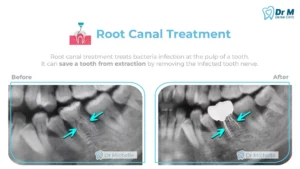
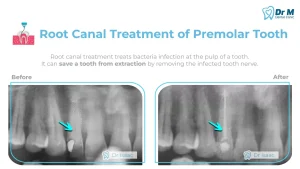
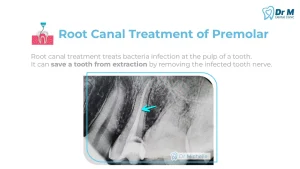
Dental X-rays are commonly taken to assess the tooth and surrounding bone. An X-ray can help the dentist evaluate the shape of the roots, the number of roots and whether there are signs of infection around the root tip.
A proper diagnosis is important because tooth pain does not always come from the tooth that appears to be the problem.
Step 2: Local Anaesthesia
Once root canal treatment is planned, local anaesthesia is administered to numb the tooth and surrounding area.
The aim is to make the procedure comfortable for the patient. Modern local anaesthesia allows dentists to perform root canal treatment while the patient remains awake and comfortable.
If you are nervous about dental treatment, let your dentist know before the procedure. Communication during treatment can also help you feel more relaxed.
Step 3: Isolating the Tooth
After the tooth is numb, the dentist will isolate it from the rest of the mouth.
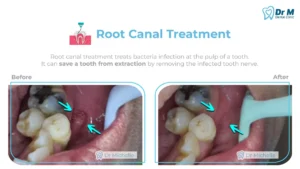
A dental dam, also known as a rubber dam, may be placed around the tooth. This creates a clean working environment and helps prevent saliva and bacteria from entering the tooth during treatment.
Isolation is an important part of root canal treatment because the root canals need to remain as clean and dry as possible throughout the procedure.

Step 4: Creating an Access Opening
The dentist then creates a small opening through the top of the tooth.
This opening provides access to the pulp chamber and the root canals underneath.
The size and location of the access opening depend on the tooth being treated. Front teeth, premolars and molars have different internal anatomy, and molars can have multiple roots and canals.
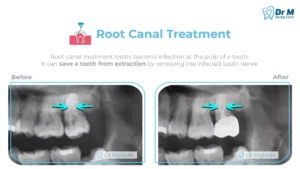
Step 5: Removing the Infected or Inflamed Pulp
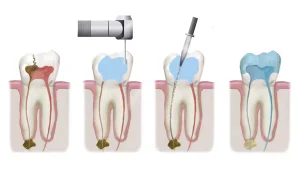
Once access to the pulp chamber and root canals has been established, the damaged or infected pulp tissue is carefully removed.
Specialised dental instruments are used to enter the root canals and remove the unhealthy tissue.
The dentist also needs to identify the individual canals and determine their working lengths. This is important because the canals extend through the roots and may have complex shapes.
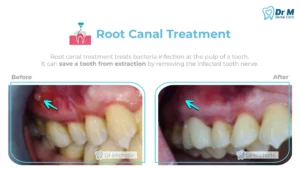
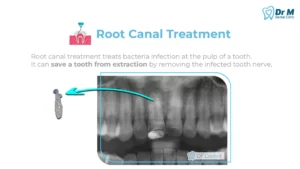
Step 6: Cleaning and Shaping the Root Canals
This is one of the most important stages of root canal treatment.
The dentist uses specialised instruments to clean and shape the root canals. The goal is to remove remaining infected tissue, bacteria and debris while creating a suitable shape for the final filling material.
Irrigating solutions are also used during treatment to help clean and disinfect the inside of the canals.
Because root canals can be extremely narrow and have curves or branches, treatment requires careful instrumentation and attention to the individual anatomy of each tooth.
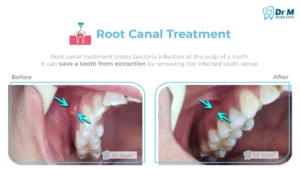

Step 7: Disinfecting the Root Canal System
Cleaning the canals mechanically is only part of the process. Irrigation and disinfection are also essential.
The dentist uses appropriate irrigating solutions to help reduce bacteria and remove debris from areas that dental instruments may not be able to reach directly.
The objective is to create a clean, disinfected canal system before it is sealed.
In some cases, particularly when there is significant infection, treatment may require more than one appointment. A medicament may be placed inside the canals and the tooth temporarily sealed before the next stage of treatment.
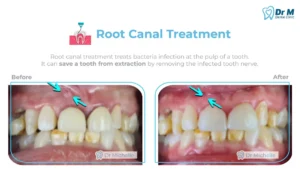

Step 8: Filling and Sealing the Root Canals
Once the canals have been adequately cleaned, shaped and disinfected, they are filled and sealed.
A commonly used root canal filling material is gutta-percha, a biocompatible rubber-like material.
The gutta-percha is placed inside the prepared canals together with a sealing material. The purpose is to seal the cleaned canal space and reduce the risk of bacteria entering the canals again.
A temporary filling may be placed over the access opening if the tooth requires further treatment before its final restoration.
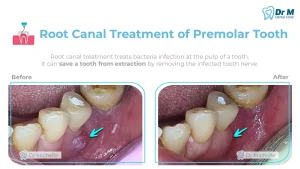

Step 9: Checking the Completed Root Canal
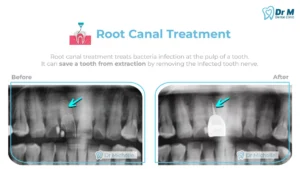
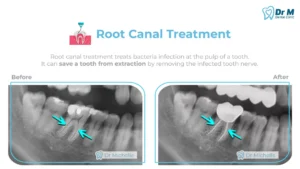
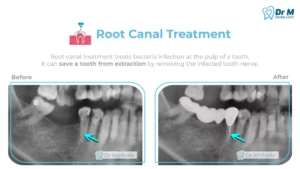
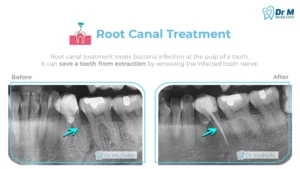
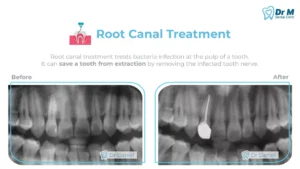
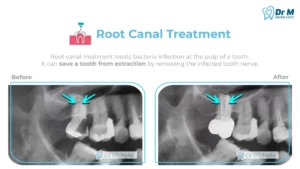
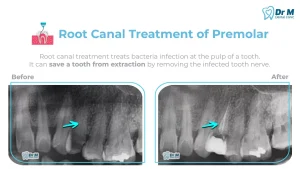
The dentist may take another X-ray after the canals have been filled.
This allows the dentist to assess the completed root canal filling and check the treatment radiographically.
The final result depends on several factors, including the condition of the tooth before treatment, the complexity of the root canal anatomy, the quality of cleaning and sealing, and the final restoration.
Step 10: Restoring the Tooth
Completing the root canal is not always the final step.
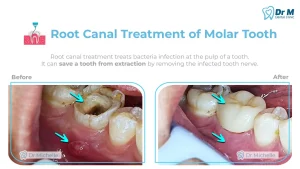
After root canal treatment, the tooth needs to be properly restored so that it can return to normal function and is protected from further damage.
Depending on the remaining tooth structure and the location of the tooth, the final restoration may be a filling, onlay, crown or another suitable restoration.
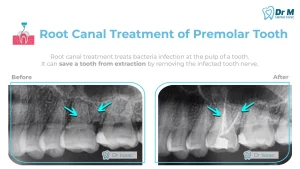
Back teeth such as premolars and molars often require particular attention because they experience significant chewing forces.
A properly restored tooth can continue to function as part of your natural dentition.

How Many Visits Does Root Canal Treatment Take?
The number of appointments depends on the tooth and the complexity of the infection.
Some root canal treatments can be completed in one appointment, while others may require two or more visits.
Factors that may affect the treatment time include:
- The type of tooth
- Number and shape of root canals
- Severity of infection
- Presence of an abscess
- Previous root canal treatment
- Calcified or very narrow canals
- Complexity of the root anatomy
- Whether additional procedures are required
Your dentist will assess the tooth and recommend an appropriate treatment plan.

Is Root Canal Treatment Painful?
Many patients worry that root canal treatment will be painful.
The tooth is normally treated under local anaesthesia, and the purpose of treatment is to remove the inflamed or infected pulp that is causing the problem.
It is normal for the treated tooth to feel tender or slightly uncomfortable for a few days after treatment, particularly if there was already inflammation or infection around the tooth.
If you experience severe or worsening pain, significant swelling, or other unusual symptoms after treatment, contact your dentist for assessment.

What Should You Do After Root Canal Treatment?
Until the tooth has received its final restoration, it is important to follow your dentist’s instructions.
Depending on the tooth and restoration, you may be advised to avoid biting hard foods on the treated tooth temporarily.
Continue maintaining good oral hygiene by brushing and cleaning between your teeth as recommended.
Most importantly, attend the follow-up appointment for the final restoration if one has been planned. Root canal treatment removes the infected pulp, but the tooth still needs a strong and well-sealed restoration to protect it.
Can a Root Canal Save My Natural Tooth?
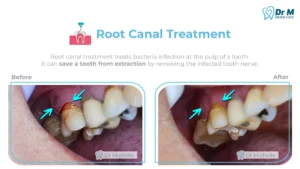
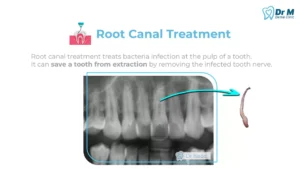
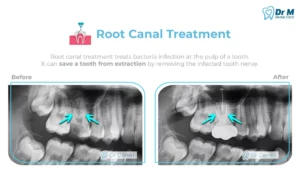
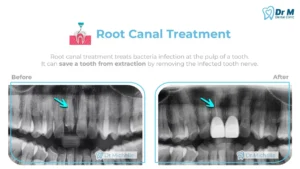
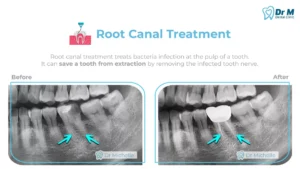
One of the main benefits of root canal treatment is that it can allow a damaged or infected tooth to remain in the mouth instead of being extracted.
When a natural tooth can be predictably treated and restored, preserving it may help maintain normal chewing function and avoid the need for tooth replacement.
However, not every tooth can be saved. Teeth with severe fractures, inadequate remaining tooth structure or other unfavourable conditions may require alternative treatment. Your dentist will assess the tooth before recommending treatment.
Root Canal Treatment in Ipoh
If you have persistent toothache, sensitivity, pain when biting, swelling or a tooth that has become dark or damaged, it is worth having the tooth assessed rather than waiting for the symptoms to disappear.
At Dr M Dental Clinic Ipoh, our dentists assess the condition of the tooth before recommending treatment. Depending on the diagnosis, treatment may include root canal treatment, restoration or other appropriate options.
If you are looking for root canal Ipoh, an examination is the first step to finding out whether your tooth can be treated and preserved.
Frequently Asked Questions About Root Canal Treatment
How long does a root canal take?
Treatment time varies depending on the tooth and its anatomy. A straightforward case may be completed in one visit, while more complex or infected teeth may require additional appointments.
Can I eat after a root canal?
You can generally eat after treatment, but you should follow your dentist’s instructions. If the area is still numb, avoid chewing until the sensation has returned to reduce the risk of accidentally biting your cheek or tongue.
Does every toothache require a root canal?
No. Toothache can have many different causes. A dental examination and appropriate testing are needed to determine whether root canal treatment is necessary.
What happens if I do not treat an infected tooth?
An untreated infected pulp can potentially lead to continuing pain, infection around the root, swelling or an abscess. Early assessment may provide more treatment options.
Is root canal treatment better than extraction?
When a tooth can be predictably treated and restored, root canal treatment may allow you to preserve your natural tooth. Extraction removes the tooth and may require replacement with another treatment such as an implant, bridge or denture.
How do I know if I need a root canal in Ipoh?
If you have persistent dental pain, prolonged sensitivity to hot or cold, pain when biting, swelling or other concerning symptoms, arrange a dental examination. Your dentist can determine whether root canal treatment is appropriate.
Book a Dental Assessment in Ipoh
If you are experiencing tooth pain or have been told that you may need a root canal, do not wait until the symptoms become worse.
Visit Dr M Dental Clinic Ipoh for a dental examination and discuss your treatment options with our dental team.
Dr M Dental Clinic Ipoh
Opening Hours: Every day, 9 AM – 6 PM
Including Saturdays, Sundays & Public Holidays