
Introduction
Missing teeth can affect more than just your smile. They may make chewing difficult, change the way you speak and affect your confidence in social situations. Fortunately, dentures offer a practical way to replace missing teeth and help restore everyday oral function.
At Dr M Dental Clinic Ipoh, we understand that every patient has different dental needs. Whether you have lost several teeth or all the teeth in an arch, our dentists will assess your oral condition and discuss suitable tooth replacement options with you.
If you are searching for dentures in Ipoh, this guide explains the different types of dentures, the detailed treatment process, what to expect during each appointment and how to care for your new dentures.
What Are Dentures?
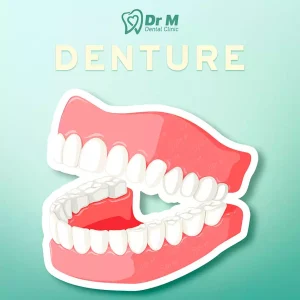
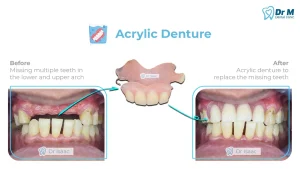
Dentures are removable dental appliances designed to replace missing teeth and the surrounding gum structures. They are custom-made to fit the patient’s mouth and are designed to improve chewing, speech and appearance.
There are two main types of removable dentures.
1. Complete Dentures
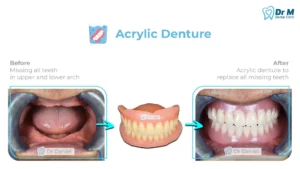
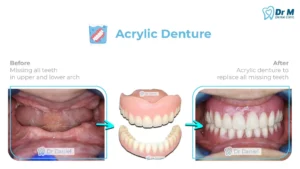
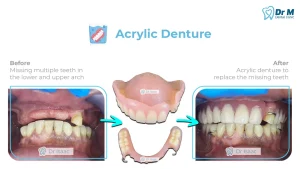
Complete dentures replace all the natural teeth in the upper jaw, lower jaw or both. They are commonly recommended for patients who have lost all their teeth in an arch.
Upper complete dentures usually cover the palate to help with retention, while lower complete dentures are shaped around the tongue and other structures in the mouth. Lower dentures may be more challenging to stabilise because they have a smaller supporting area and are affected by tongue movement.
2. Partial Dentures
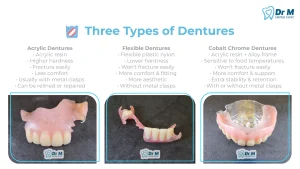
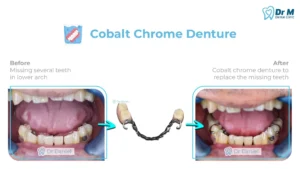
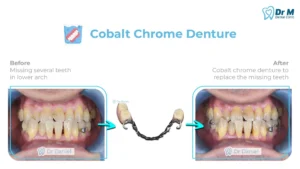
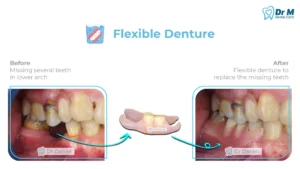
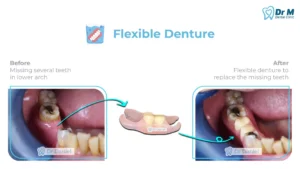
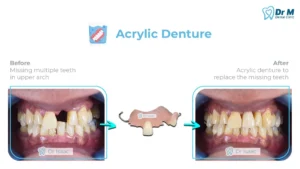
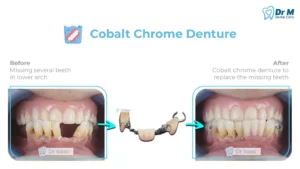
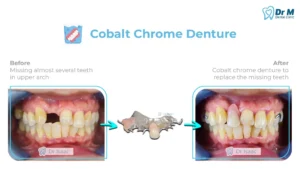
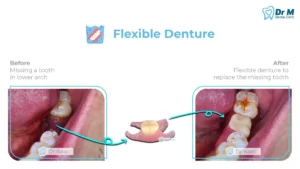
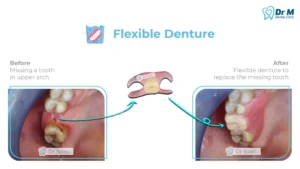
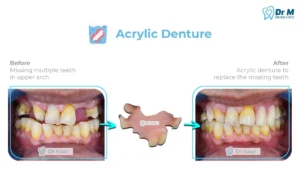
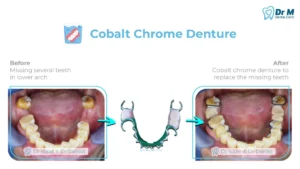
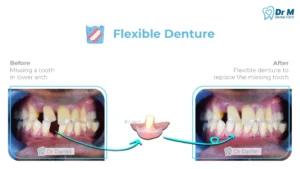
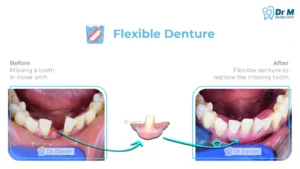
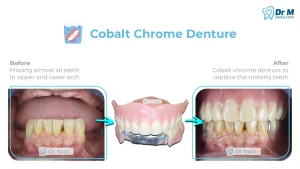
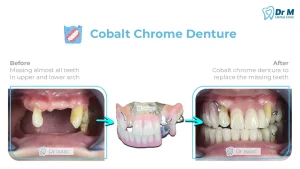
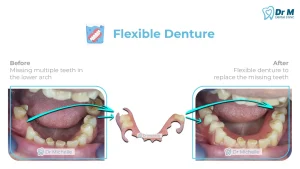
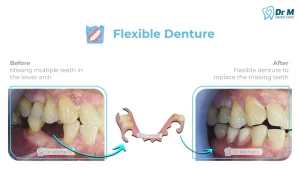
Partial dentures replace some missing teeth when natural teeth remain. They are designed to fit around the remaining teeth and may use clasps or other components to help with retention and stability.
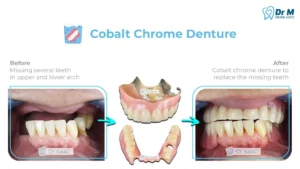
Depending on the patient’s needs, partial dentures may be made from acrylic, metal frameworks or other suitable denture materials.
Our dentists will assess your remaining teeth, gum health, bite and personal preferences before recommending an appropriate design.
Who May Need Dentures?
Dentures may be suitable for patients who:
- Have lost several teeth due to decay, gum disease, injury or other causes.
- Have lost all their natural teeth in the upper or lower jaw.
- Experience difficulty chewing because of missing teeth.
- Wish to improve the appearance of their smile.
- Need a removable and relatively non-invasive tooth replacement option.
Not everyone is suitable for the same type of denture. Depending on your condition, alternatives such as dental bridges or dental implants may also be considered.
The Step-by-Step Denture Treatment Process at Dr M Dental Clinic Ipoh
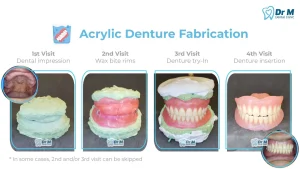
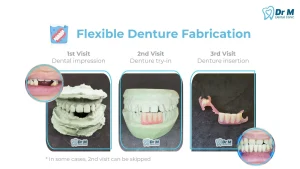
The denture treatment process involves several stages to ensure the appliance fits comfortably and functions as intended. The exact number of appointments depends on the complexity of the case, the type of denture and whether any preliminary dental treatment is needed.
Step 1: Dental Consultation and Oral Examination
The first step is a consultation with our dentist.
During this appointment, the dentist will discuss your concerns, dental history, medical history and expectations. An examination of your teeth, gums, bite and oral tissues will be carried out to determine the most appropriate treatment plan.
For patients who still have natural teeth, the dentist will assess whether these teeth are healthy enough to support a partial denture. Loose teeth, untreated decay, gum disease or other dental problems may need to be addressed before denture fabrication.
Dental X-rays may be recommended when clinically indicated to assess the supporting structures or investigate suspected problems that cannot be fully evaluated through a visual examination.
After the assessment, the dentist will explain the available options, expected treatment stages, limitations and costs.
Step 2: Preliminary Impressions
Once the treatment plan is confirmed, the dentist takes preliminary impressions of the upper and lower jaws.
An impression records the shape of your teeth, gums and surrounding oral structures. This information is used to create a model of your mouth, which helps the dental laboratory prepare for the next stages of denture construction.
Depending on your oral condition, the dentist may use conventional impression materials or digital scanning technology if appropriate and available.
Accurate impressions are important because they help the denture fit the supporting tissues and remaining teeth as closely as possible.
Step 3: Custom Tray and Final Impressions
For many cases, a custom impression tray is made using the preliminary model. The dentist then uses this tray to obtain a more precise final impression.
The borders of the tray may be shaped to record how the surrounding oral tissues move during activities such as speaking, smiling and opening the mouth.
The final impression captures important details of the denture-supporting tissues. These details help the laboratory fabricate a denture base that fits the mouth more accurately.
Not every case requires a separate custom-tray appointment. The technique used will depend on the patient’s anatomy and the dentist’s clinical judgement.
Step 4: Bite Registration and Tooth Selection
The next stage involves recording the relationship between the upper and lower jaws.
The dentist may use wax rims or other registration materials to determine the appropriate bite position and vertical dimension. These measurements help establish how the upper and lower teeth should meet when the mouth closes.
The dentist will also select suitable artificial teeth based on factors such as:
- Tooth size and shape.
- Natural tooth colour and appearance.
- Facial proportions and lip support.
- The patient’s preferences.
- The intended function of the denture.
For complete dentures, this stage is particularly important because there are no natural teeth in the arch to guide the bite.
Step 5: Wax Try-In
Before the final denture is completed, a wax trial denture may be prepared.
At this appointment, the dentist checks the arrangement of the artificial teeth and evaluates the appearance, bite, lip support and overall fit of the trial setup.
Patients may be asked to speak, smile and close their teeth together so that the dentist can assess the result from different angles.
This is an opportunity to discuss the tooth appearance and make suitable changes before the denture is processed into its final material.
A wax try-in is not necessary for every case, but it is particularly useful when the tooth arrangement and appearance need careful evaluation.
Step 6: Final Denture Fabrication
After the trial arrangement has been approved, the dental laboratory processes the denture into its final form.
The artificial teeth are secured in a denture base, commonly made from acrylic resin. Some partial dentures may incorporate a metal framework or other materials depending on the selected design.
The laboratory then finishes and polishes the denture before it is returned to the clinic for fitting.
The fabrication period varies according to the laboratory workflow, the denture type and whether additional adjustments are required.

Step 7: Denture Fitting and Insertion
When your denture is ready, you will return to the clinic for insertion.
The dentist checks several aspects, including:
- How the denture sits on the gums and supporting tissues.
- Retention and stability during movement.
- Pressure areas that may cause soreness.
- The way the upper and lower teeth meet.
- Speech and overall comfort.
Small adjustments may be made to relieve excessive pressure or improve the bite. If significant problems are identified, further modification or laboratory work may be needed.
Your dentist will also explain how to insert and remove the denture safely, as well as how to clean and store it.
Step 8: Follow-Up Appointments and Adjustments
It is normal for new dentures to require an adjustment period. You may initially notice increased saliva, mild difficulty speaking clearly or a feeling that the denture is bulky.
Some patients also develop sore spots as the oral tissues adapt to the new appliance. A follow-up appointment allows the dentist to identify and relieve areas of excessive pressure.
Do not attempt to trim or reshape the denture yourself. If it causes persistent pain, rubbing or ulceration, contact the clinic for an assessment.
Repeated adjustments may be necessary, particularly during the early adaptation period. The number of visits varies from patient to patient.
How Long Does It Take to Get Dentures?
The time needed to complete denture treatment depends on the type of denture, the condition of your mouth, laboratory arrangements and the number of adjustments required.
A straightforward case may be completed over several appointments, while more complex cases may take longer. If tooth extractions, gum treatment or healing time are required, the overall process may be extended.
Immediate dentures can sometimes be prepared for insertion soon after tooth extraction, but they often require additional adjustments as the gums and bone change during healing.
Your dentist will provide a more realistic timeline after examining your mouth.

What Is It Like to Wear Dentures for the First Time?
New dentures require time and practice. During the initial adjustment period, you may experience:
- A feeling of fullness in the mouth.
- Increased saliva production.
- Temporary changes in speech.
- Difficulty chewing certain foods.
- Minor pressure areas or discomfort.
Start with soft foods cut into small pieces and chew slowly using both sides of your mouth when possible. Gradually introduce firmer foods as you become more comfortable.
Reading aloud can help you practise speaking with your dentures. If discomfort persists or your dentures repeatedly loosen, arrange a review rather than trying to tolerate the problem.
How to Care for Your Dentures
Good denture hygiene helps maintain the appliance and protect your oral tissues.
Clean your dentures daily. Remove food debris and brush the denture gently with a denture brush and a suitable denture cleanser. Ordinary abrasive toothpaste may scratch some denture materials.
Clean your mouth as well. Brush any remaining natural teeth, clean your gums and tongue, and follow your dentist’s advice on oral hygiene.
Handle dentures carefully. Clean them over a basin of water or a folded towel to reduce the risk of breakage if they slip from your hands.
Follow storage instructions. Many removable dentures need to be kept moist when not worn, but the correct method depends on the denture material. Follow your dentist’s instructions.
Attend regular dental reviews. Your gums and jawbone can change over time, affecting denture fit. Your dentist can check for wear, damage, irritation and the need for adjustments or replacement.
Do not use hot or boiling water, which may distort the denture.
Are Dentures Better Than Dental Bridges or Implants?
The best option depends on your oral condition, treatment goals, budget and preferences.
- Removable dentures: Can replace several or all missing teeth and usually do not require surgical placement.
- Dental bridges: Replace one or more missing teeth by attaching a restoration to supporting teeth or implants, depending on the design.
- Dental implants: Provide support for replacement teeth through implants placed in the jawbone. Treatment involves surgery and requires assessment of bone, gums and overall suitability.
Dentures may be a practical choice for patients who prefer a removable appliance. However, they can move during eating or speaking and may need periodic adjustment or replacement. Your dentist can explain the advantages and limitations of each option.
Looking for Dentures in Ipoh?
If you are missing teeth and considering dentures, the first step is a dental consultation to assess your needs and discuss suitable treatment options.
At Dr M Dental Clinic Ipoh, we aim to provide dental care with a gentle and compassionate touch. Our dentists will explain the denture treatment process, help you understand what to expect and guide you through fitting, adjustments and aftercare.
Whether you need complete dentures or partial dentures, an individual assessment is essential to determine the most appropriate solution for your smile and oral function.
Contact Dr M Dental Clinic Ipoh to arrange a consultation and learn more about denture treatment.
Frequently Asked Questions About Dentures in Ipoh
1. Are dentures painful to wear?
New dentures may initially feel unfamiliar and can cause pressure areas or soreness. Minor adjustments can often improve comfort. Persistent pain or ulceration should be assessed by your dentist.
2. Can I eat normally with dentures?
Dentures can help restore chewing ability, but they may not function exactly like natural teeth. Start with soft foods, cut food into smaller pieces and gradually practise chewing. Some hard, sticky or very tough foods may remain difficult.
3. How long do dentures last?
The lifespan varies according to the denture material, daily care, wear and changes in your mouth. Dentures may eventually become loose or worn and may need adjustment, relining, repair or replacement.
4. Do I need to remove my dentures at night?
Many patients are advised to remove their dentures during sleep to allow the oral tissues to rest. Follow your dentist’s advice, especially if you have a specific clinical reason for wearing them overnight.
5. Can dentures replace just one missing tooth?
Yes, a partial denture can sometimes replace a single missing tooth as well as multiple missing teeth. However, a dental bridge or implant may also be suitable depending on the condition of the surrounding teeth and gums.
6. How much do dentures cost in Ipoh?
The cost depends on the type of denture, the number of teeth being replaced, the materials used, the complexity of the case and whether additional dental treatment is needed. A consultation is required to determine a suitable treatment plan and provide an accurate quotation.
7. Will my dentures look natural?
Dentures are designed to suit your mouth, facial features and remaining teeth where applicable. The appearance depends on the tooth selection, arrangement, materials and individual anatomy. Your dentist can discuss the expected result during the planning stage.
Dr M Dental Clinic Ipoh
Opening Hours: Every day, 9 AM – 6 PM
Including Saturdays, Sundays & Public Holidays