
Composite Veneers in Ipoh: A Step-by-Step Guide to Your Smile Makeover
Have you ever wished your teeth looked brighter, more even or better shaped when you smile? Composite veneers may be an option worth exploring.
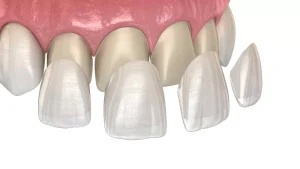
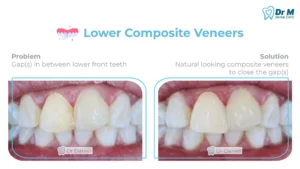
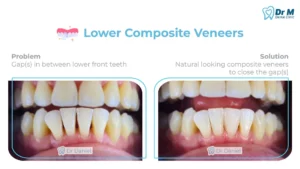
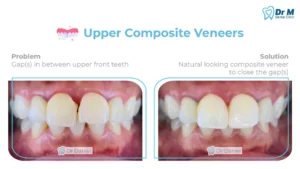
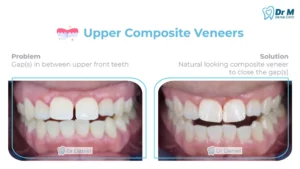
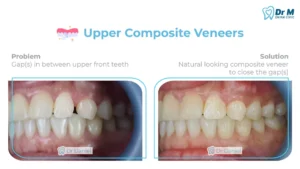
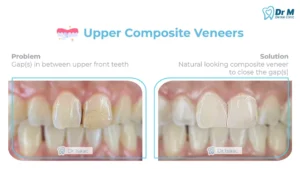
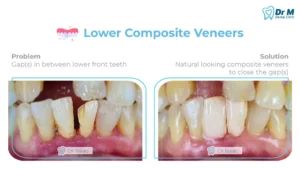
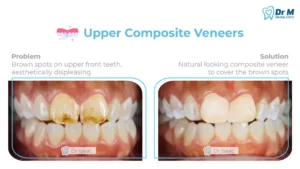
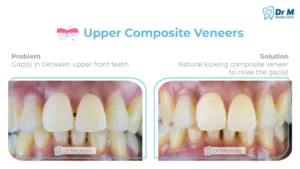
At Dr M Dental Clinic Ipoh, we understand that every smile is different. Composite veneers are a cosmetic dental treatment that uses tooth-coloured composite resin to improve the appearance of teeth. Depending on your dental condition and treatment goals, they may help address issues such as chipped edges, small gaps, uneven tooth shapes and certain discolourations.
If you are searching for veneers in Ipoh, understanding the treatment process can help you feel more prepared before your appointment. Here is a step-by-step guide to how composite veneers are typically performed.

What Are Composite Veneers?
Unlike porcelain veneers, which are fabricated outside the mouth and usually require a separate fitting appointment, direct composite veneers can often be completed in a single visit, depending on the number of teeth and the complexity of the case.
Potential benefits include:
-
A more affordable option: Composite veneers are generally less expensive than porcelain veneers.
-
Efficient treatment: Many direct composite veneer cases can be completed in one appointment.
-
Conservative tooth preparation: Some cases require little or no removal of natural tooth structure, although this depends on the individual tooth and desired result.
-
Repairability: Minor chips or damage may be repairable by adding or reshaping composite resin.
-
Customised appearance: The dentist can adjust the colour, contour and shape to complement your smile.
However, composite veneers can stain, chip or wear over time. Their longevity depends on factors such as oral hygiene, biting habits, material quality and maintenance.
Step 1: Consultation and Smile Assessment
During this appointment, you can discuss what you would like to improve. For example, you may want to correct a chipped front tooth, make uneven teeth look more symmetrical, close a small gap or improve the appearance of discoloured teeth.
Your dentist will evaluate whether composite veneers are suitable for your needs. Existing tooth decay, gum disease, significant bite problems or severe tooth damage may need to be addressed first.
It is also important to discuss your expectations. Composite veneers can improve the appearance of your teeth, but the final result depends on your natural tooth structure, tooth position and the limitations of the material.

Step 2: Smile Design and Shade Selection
Your dentist may use a dental shade guide to compare different shades against your natural teeth. The aim is to choose a colour that matches your desired appearance while considering your surrounding teeth, skin tone and the translucency of your natural enamel.
The shape and proportions of the veneers are equally important. Your dentist will consider the length, width, contours and symmetry of your teeth to help create a balanced smile.
If you are treating several front teeth, planning the colour and shape beforehand can help achieve a more consistent result.
It is worth remembering that the brightest shade is not always the most natural-looking choice. A well-planned smile should suit your facial features and personal preferences.
Step 3: Tooth Preparation
Before applying the composite resin, your dentist will prepare the tooth surface.
Depending on the condition and position of your teeth, preparation may involve cleaning the tooth and performing minimal reshaping. In suitable cases, little or no enamel removal may be necessary.
If existing fillings, decay or damaged areas are present, these may need to be addressed as part of the treatment plan.
Your dentist will aim to preserve as much healthy natural tooth structure as possible. Whether local anaesthesia is needed depends on the amount of preparation required and your individual sensitivity.
Unlike some conventional veneer procedures, direct composite veneers do not always require extensive tooth reduction. However, the treatment is not automatically reversible simply because little enamel is removed.

Step 4: Isolation and Surface Conditioning
Once the tooth is prepared, your dentist will work to keep the treatment area clean and dry. This is important because moisture contamination can interfere with the bonding process.
The dentist will then apply an appropriate bonding system according to the manufacturer’s instructions. This usually involves conditioning the tooth surface, applying a bonding agent and preparing the surface to receive the composite resin.
Good isolation and careful bonding technique are essential for helping the material adhere to the tooth.
Your dentist may use cotton rolls, suction or a rubber dam, depending on the tooth being treated and the clinical situation.
Step 5: Applying and Layering the Composite Resin
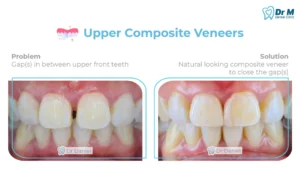
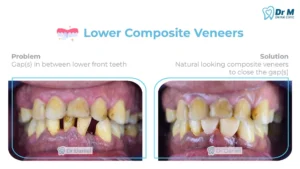
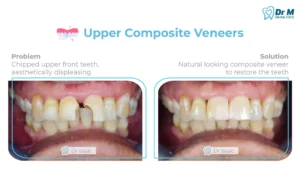
Your dentist will apply the composite resin to the prepared tooth and build up the desired shape. The material may be placed in small increments and layered to create suitable contours, colour and translucency.
Different shades or opacities may be used when necessary to imitate the natural appearance of enamel and dentine.
During this stage, the dentist carefully develops the visible surface of the tooth. This may involve improving the tooth’s length, adjusting its width or refining the shape of a chipped or uneven edge.
The composite resin is typically hardened with a dental curing light after placement of each appropriate increment.
Because the resin is shaped directly on the tooth, the dentist can make adjustments as the restoration develops. This requires attention to detail, an understanding of dental anatomy and careful control of the material.
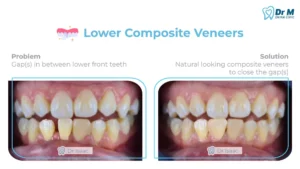
Step 6: Shaping and Bite Adjustment
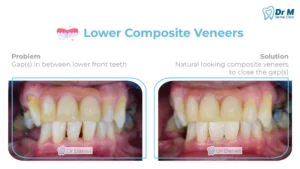
After the composite resin has been placed and cured, your dentist will refine its shape.
Excess material is removed, and the contours are adjusted to create a smooth transition between the veneer and the natural tooth. The dentist will assess the length, symmetry and overall appearance of the treated teeth.
Your bite will also be checked. When you close your mouth or move your jaw, the restored teeth should not experience inappropriate contact or excessive loading.
This step is important because excessive biting pressure can increase the risk of chipping or damage, particularly in patients who grind or clench their teeth.
Your dentist may make further adjustments until the veneers look balanced and function comfortably.
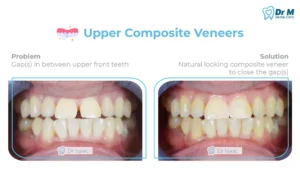
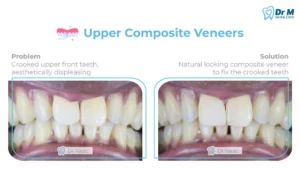
Step 7: Polishing for a Natural Finish
Polishing smooths the resin surface and helps create a natural-looking shine. It also helps reduce surface roughness, which can contribute to plaque accumulation and staining.
The dentist will check the edges, surface texture and appearance under the available clinical lighting.
The goal is to create a finish that blends with the surrounding teeth as naturally as possible.
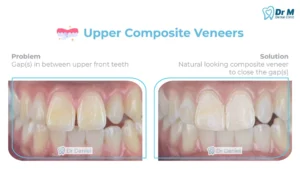
Step 8: Final Review and Aftercare Advice
Before you leave, your dentist will review the completed veneers and provide advice on how to care for them.
You may be advised to avoid biting directly into very hard foods with the treated teeth and to cut certain foods into smaller pieces. Habits such as biting fingernails, chewing ice or using your teeth to open packaging can damage composite veneers.
Brush twice daily with fluoride toothpaste, clean between your teeth every day and attend regular dental check-ups. If you smoke or frequently consume coffee, tea or other staining foods and drinks, be aware that composite resin may discolour over time.
If you grind or clench your teeth, ask your dentist whether a night guard is appropriate.
Composite veneers may require occasional polishing, repair or replacement as they age. Contact your dentist if you notice a chip, rough edge or change in your bite.
How Long Does Composite Veneer Treatment Take?
Direct composite veneers can often be completed in one visit. However, the duration depends on the number of teeth being treated, the complexity of the smile design and the amount of shaping required.
Treating one chipped tooth may take considerably less time than enhancing several front teeth. Your dentist can provide a more accurate estimate after examining your teeth.

Are Composite Veneers Suitable for Everyone?
Composite veneers may be suitable for people who want to improve minor imperfections in the appearance of their teeth. However, they are not the best solution for every dental concern.
For example:
-
Significant tooth misalignment may require orthodontic treatment.
-
Extensive decay or gum disease should be treated before cosmetic work.
-
Severe tooth damage may require a different restoration.
-
Patients who grind their teeth may have a higher risk of veneer damage.
-
Some types of deep discolouration may be difficult to mask completely with composite resin.
A dental examination is the best way to determine whether composite veneers are suitable or whether another treatment would provide a better long-term result.
Composite Veneers vs Porcelain Veneers
Both composite and porcelain veneers can improve the appearance of your smile, but they differ in material, fabrication and maintenance.
| Feature | Composite veneers | Porcelain veneers |
|---|---|---|
| Material | Tooth-coloured composite resin | Dental porcelain |
| Treatment time | Often completed in one visit for direct veneers | Usually requires laboratory fabrication and more than one visit |
| Cost | Generally lower | Generally higher |
| Repair | Minor damage may be repaired directly | Repairs can be more complex |
| Stain resistance | More prone to staining over time | Generally more stain-resistant |
| Longevity | Often shorter and more maintenance-dependent | Often longer-lasting with appropriate care |
The best option depends on your oral health, aesthetic goals, budget and willingness to maintain the restorations. Your dentist can explain the advantages and limitations of each option based on your individual case.

Looking for Veneers in Ipoh?
If you are considering composite veneers, Dr M Dental Clinic Ipoh can assess your teeth and discuss suitable options for improving your smile.
Every smile is unique, and cosmetic dentistry should be planned around your dental health, facial features and personal goals rather than a one-size-fits-all approach.
Book a consultation with Dr M Dental Clinic Ipoh to find out whether composite veneers are right for you and what results you can reasonably expect.
Dr M Dental Clinic Ipoh
Opening Hours: Every day, 9 AM – 6 PM
Including Saturdays, Sundays & Public Holidays